

So, you’ve decided to take the plunge and fly with your little ones. Congratulations! But wait—what about the car seats? When you’re driving to your vacation, it’s a no-brainer; the car seats are already installed and ready to roll. But the moment you step into an airport, it’s like you’re entering a game show filled with logistical questions and a dash of chaos. Let’s dive into the options for flying with car seats because, let’s face it, we could all use a little help navigating this maze.
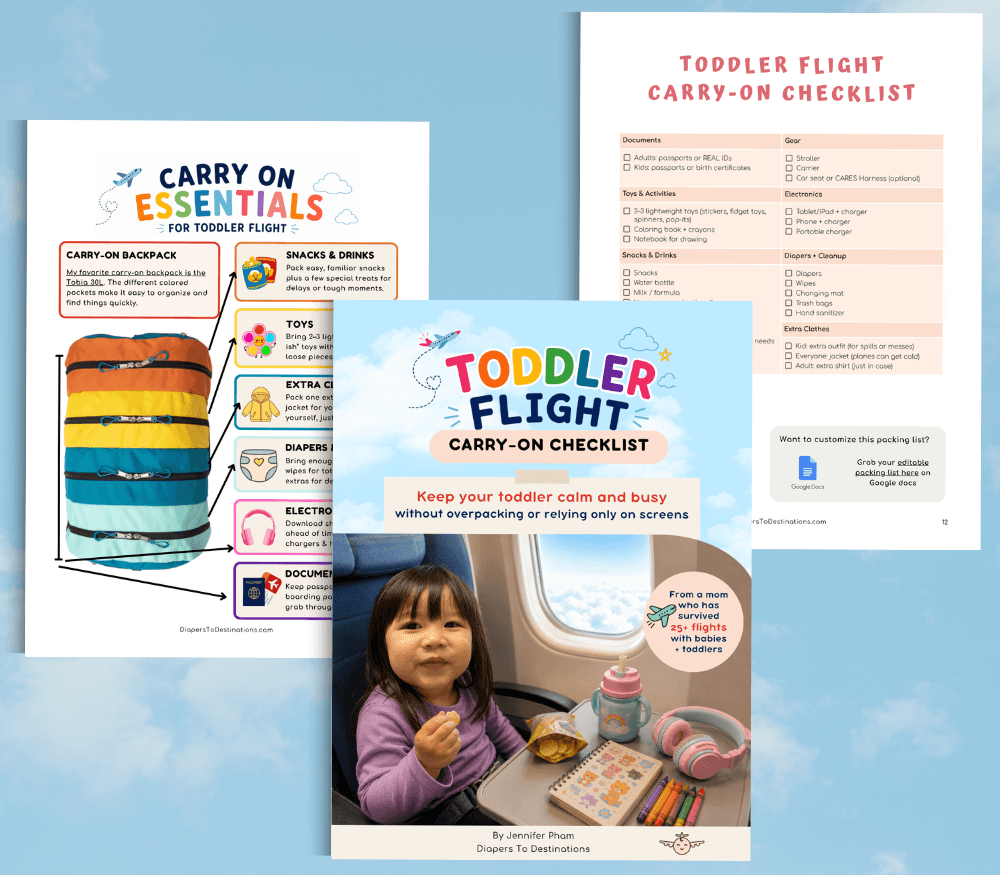
Flying With a Toddler Soon?
Get my free carry-on checklist so you don’t forget the snacks, entertainment, diapers, and travel essentials that can make or break a flight.
Overview of Options for Flying with Car Seats
Here’s the lowdown on your options:
1. Check-In
Ah, the classic check-in option! Just like your luggage, you can check in your car seat at the ticket counter. The best part? Car seats are considered “assisted medical devices,” so you can check one for free per child—cha-ching! After your flight, just swing by baggage claim, and keep your eyes peeled for your car seat, which is sometimes on the baggage claim carousel and sometimes in a separate “oversized baggage” section.
Check out the pros and cons for checking in a car seat.
Check out the tips for checking in a car seat.
2. Gate-Check
Gate-checking your car seat is simple and convenient! You just leave it at the boarding gate right before you board the plane, and you’ll pick it up at the plane door when you land—easy peasy! This method significantly reduces the chances of your car seat getting lost or accidentally sent to another destination, which is a huge relief, especially when you arrive at your destination. Plus, since it’s being transported with fewer items, there’s slightly less risk of damage.
However, keep in mind that sometimes you might have to wait a bit for gate-checked items to be delivered, which can be a nail-biter if you’re trying to catch a connecting flight with a short layover. If I had a layover under 1 hour, I wouldn’t gate-check it.
Another reason you might want to gate-check your car seat: if you have a lap infant (not a separate paid seat) and you want to install the car seat, you can still bring the car seat with you through the airport and chat with the gate agent. If the flight isn’t fully booked, you might just get lucky and be allowed to bring it on board. It’s a bit of a roll of the dice since lap infants don’t take up a paid seat, but if the gate agent gives you the thumbs up, you can use the car seat in the air—score! If not, you’ll need to gate-check the car seat instead. Good luck!
Check out the pros and cons for gate-checking a car seat.
Check out the tips for gate-checking a car seat.
3. Carry-On and Install
For the safety-conscious parent, carrying on the car seat is the safest option, according to the FAA, even though it’s logistical hell. It’s the best way to ensure your car seat stays safe and sound—no risk of loss or damage here! Just be sure you’ve purchased a separate seat for your little one. You’ll want to reserve or snag a window seat that isn’t in the exit row—gotta keep those emergency exits clear!
Keep in mind that this option is only for kiddos under 40 lbs, and your car seat should be narrower than the width of the plane seat (16 inches is recommended, but it’s a good idea to check with your airline to be sure). Also, boosters are not allowed to be used on plane seats.
Check out the pros and cons for carrying on and installing a car seat.
Check out the tips for carrying on and installing a car seat.
4. Opting Not to Bring a Car Seat
Sometimes, less is more! If you’re feeling bold, you can leave the car seat at home and explore some alternatives. Here’s how:
- Get a car seat at your destination: You can rent one from cool services like BabyQuip, Babyborrow, or Babyaway where local parents can rent their baby gear. Or, check with your rental car company. You could even borrow one from family or friends that are at your destination—just make sure it’s not from that cousin who drives like a maniac! (just kidding).
- Travel to a public transportation paradise: If you’re headed somewhere with a stellar public transport system (hello, London!), you can skip the car seat entirely and just hop on a bus or train. That’s what we did for 2 weeks in Europe with Serena, who was 2 years old at the time. We went to London, Paris, Rotterdam, and Bruges without a car seat.
- Consider lighter alternatives: Think about bringing a RideSafer Vest (for kiddos 22 lbs and up) or a WayB Pico portable car seat (8lbs and forward-facing only, so most likely for a child 2 and older). They’re like the cool, lightweight cousins of traditional car seats!
Check out the pros and cons for not bringing a car seat.
Pros and Cons Of Each Option
| Option | Description | Pros | Cons |
|---|---|---|---|
| Check-In | Check in the car seat at the ticket counter along with luggage. | – Convenience: No need to carry through the airport. – Free Check-in: One car seat per child can be checked for free. | – Risk of Damage: Potential mishandling by baggage handlers. – Baggage Claim Wait: May wait at baggage claim. – Lost Luggage Fear: Risk of losing the car seat. |
| Gate-Check | Leave the car seat at the boarding gate and pick it up after the flight. | – Unlikely to Lose It: Gate-checked items are loaded onto the plane right after boarding. – Lower Risk of Damage: Less risk of damage compared to regular checked baggage. – Time Saver: Can save time by skipping baggage claim if you don’t have checked luggage. | – Wait Time: May have to wait a few minutes at the door of the plane when deboarding. |
| Carry-On and Install | Bring the car seat on board and install it in a purchased seat. | – Safety First: Safest option during turbulence. – Familiarity: Child has a comfy spot to sleep. – No Risk of Damage: You’re bringing it on with you so almost no risk of it being thrown against something else. | – Costly Ticket: Requires a separate ticket for the child. – Heavy Lifting: Difficult to carry through the airport. |
| Opting Not to Bring a Car Seat | Leave the car seat behind and use alternatives. | – Flexibility: Easier travel without a bulky car seat. – Public Transport: Ideal for destinations with good public transport. | – Dependency on Rentals: May need to rent or borrow a car seat upon arrival. – Limit Destinations: Li |
✈️ My Favorite Toddler Flight Items
Toddlers + travel = chaos. These are my sanity savers:
1. Check-In
This is checking in your car seat along with your luggage at the ticket counter before security.
Pros:
- Convenience: No need to lug that hefty seat through the airport like a pack mule.
- Free Check: It’s considered an “assisted medical device,” so you can check one car seat per child for free. Score!
Cons:
- Risk of Damage: There’s a risk of damage from the baggage handlers who seem to think car seats are indestructible.
- Baggage Claim Wait: You’ll have to wait at baggage claim, though if you are already checking in luggage, you’ll probably already be waiting.
- Lost Luggage Fear: And there’s always that nagging fear of your car seat getting lost in the abyss of checked luggage.
Real Experiences
- My experience: When we traveled with our 1 year old baby on a 5-hour flight to Florida, we checked in our car seat since it was free (at least for every airline I’ve seen). This way, we didn’t have to lug it around the airport, especially since we had a lap infant and didn’t have an extra seat. Plus, we still needed the car seat as soon as we landed for our car rides. It worked like a charm!
- Another mom’s experience: “I usually check at least one car seat in a padded car seat bag at the ticket counter. Then I either roll the other one on a little caddy for my kid to sit in on the plane or check it. I’ve had some damage on all our flights, but it was my fault for not collapsing the seat properly. My biggest tip? Get a good padded bag and adjust the seat settings to the most compact position to avoid breakage!”
2. Gate-Check
This is where it gets a bit more hands-on. You can leave your car seat at the boarding gate and pick it up as soon as you get off the plane.
Pros:
- Unlikely to Lose It: Gate-checked items, including strollers and walkers, are loaded onto the plane right after boarding, so it’s going to the right plane (unlike your check-in luggage that may have flown somewhere else).
- Lower Risk of Damage: Compared to regular checked baggage, there’s a lower risk of damage since gate-checked items are handled separately from the heavier checked luggage (though they end up getting stored in the same cargo bin).
- Time Saver: If you don’t have any checked luggage, you can skip baggage claim, saving you time at the airport.
Cons:
- Hauling Required: You still have to haul the car seat through the airport, which can be a workout.
- Wait Time: You may have to wait a few minutes at the door of the plane when deboarding for the car seat to be brought to you, which can be inconvenient if you’re in a rush or a tight layover.
Real Experiences
- My experience: “We took our Doona stroller, which converts to a stroller for our baby. We gate-checked it (collapsed it into its car seat form), and it arrived at the door when we landed (no wait)—just in time for us to push our baby to baggage claim.”
3. Carry-On and Install
If you want to go all out for safety, you can bring the car seat on board and install it in your purchased seat.
Pros:
- Safety First: The FAA says this is the safest way for your baby to fly, especially during turbulence.
- Familiarity: Plus, your little one has a comfy, familiar spot to nap.
- No Risk of Damage: You’re bringing it on with you so almost no risk of it being thrown against something else.
Cons:
- Costly Ticket: You’ll need to buy a separate ticket for your child, which can feel like a hefty price tag. (Though if you’re tempted to drive instead of fly because you can’t afford another plane ticket for a car seat, flying is significantly safer than driving!)
- Heavy Lifting: And let’s not forget the struggle of hauling that car seat through the airport—hello, arm workout!
Real Experiences
- Another mom’s experience: “We’ve had great success using car seat carts at the airport. You can put your child directly in the car seat on the cart, and it makes navigating the terminal a breeze. Just make sure to attach your diaper bag with some extra large carabiners to free up your hands!”
- Another mom’s experience: “You know, our toddler was getting really irritable and fussy before the flight, and I was starting to panic a bit. But as soon as we got him into his car seat, he just conked out! I can’t believe we underestimated how much a comfortable space could help him relax. The rest of the flight was a total breeze! It was such a relief to see him peacefully sleeping while we could finally enjoy some quiet time. Lesson learned—never underestimate the power of a cozy car seat!”
4. Opting Not to Bring a Car Seat
Sometimes, it’s just easier to leave the car seat behind and find alternatives.
Alternatives:
- Rent a car seat at your destination (check out BabyQuip or your rental car company).
- Borrow from family or friends at your destination.
- Travel to a place where public transportation reigns supreme—London, anyone?
- Lighter alternatives to traditional car seats:
- CARES harness on the plane
- RideSafer Vest or other lightweight and portable car seats designed for travel (WayB Pico – forward facing only)
Pros:
- Convenience: Traveling without a car seat means one less bulky item to haul through the airport and onto the plane. You can navigate more easily, especially with a toddler in tow.
- Less Hassle: You can skip the stress of checking in or gate-checking a car seat, which can sometimes lead to damage or loss.
- Flexibility: If you’re traveling to a city with excellent public transportation, you can avoid the need for a car seat altogether, making your trip more enjoyable and less complicated.
- Lightweight Alternatives Are Easier To Carry and Setup: You can opt for lighter travel solutions, like the CARES harness for the plane or the RideSafer Vest, which are easier to carry and set up.
Cons:
- Safety Concerns: Without a car seat, your child may not be as secure during car rides at your destination. While rental options exist, you can’t guarantee the quality or suitability of the seat you’ll get.
- Limited Availability: Finding a suitable rental car seat or borrowing one from family or friends may not always be possible, especially if you’re traveling to a less populated area.
- Installation Challenges: If you do rent or borrow a car seat, you might face difficulties installing it correctly, especially if you’re unfamiliar with the model.
- Regulations and Compatibility: Not all lightweight alternatives are suitable for every situation. For instance, the CARES harness is only for use on airplanes, and the RideSafer Vest may not meet local regulations for car travel.
Real Experiences
- My experience with a destination using only public transportation: On our trip to Europe, we didn’t take a car seat with us. When we were in London, they had a fantastic public transportation system, and we took buses, trains, or walked everywhere. We even took a train to Paris, then to Rotterdam in The Netherlands, and to Bruges, Belgium, before heading back to London. A friend picked us up from Heathrow airport in London, and he came with a car seat borrowed from a friend. It worked out perfectly, and we didn’t miss the car seat at all!
- My experience with the RideSafer vest: We started using the RideSafer vest for our daughter, Serena, when she was 3 years old in Minnesota, which allowed us to ditch the bulky car seat. It’s compact, easy to use, and designed for children weighing 22+ lbs (typically older than 1 or 2 years). Serena, who was 27 lbs at the time, found it made the seat belt fit snugly and safely, and it conveniently fits in her backpack or our diaper bag.
Want My Full Carry-On Packing List?
Instead of scribbling notes from this article, grab my free Toddler Flight Carry-On Checklist with everything I need to keep my kids happy, busy, and comfortable on a flight.
Pros and Cons: Renting vs. Bringing Your Own Car Seat
Alright, fellow parents, let’s chat about another dilemma: to rent or to bring your own car seat when you’re flying with the kiddos. It’s like deciding between a cozy home-cooked meal or dining out—one is budget-friendly but requires a more effort grocery shopping, cooking, and cleaning, while the other is easier and more convenient but comes with a higher price tag. So, let’s break it down!
Renting A Car Seat At Your Destination
Pros:
- More Convenient: Let’s be real—hauling a car seat through the airport and onto the plane is like trying to carry a small elephant while wrangling a toddler. Renting means you can skip the workout and just show up ready to roll.
Cons:
- More Expensive: While avoiding the hassle is great, it might cost you. Renting can add up faster than your child’s snack demands on a long flight.
- Installation Woes: You might find yourself staring at the rental car seat like it’s a Rubik’s cube, wondering how on earth to install it. Learning on the fly can be stressful when you’re already juggling the kids, the luggage, and the paperwork.
- Condition Unknown: You really don’t know what you’re getting. Will it be in pristine condition or look like it’s been through a demolition derby? It’s a gamble!
- Fit Issues: Car rental companies often have a limited selection of car seats, which means you might end up with one that doesn’t meet your child’s height and weight requirements. A convertible toddler seat might not be suitable for your young infant, while an infant seat could be impossible to fit for your bigger toddler. Baby equipment rental places seem much better with this because it’s actual parents renting equipment.
Real Experiences From Other Parents
Now, let’s spill the tea on what other moms have experienced in the great rental vs. bring-your-own debate:
- Safety Debate: Some moms declare that it’s unsafe to use a car seat when you don’t know how the ****car seats have been stored, handled, and cleaned, so it’s a gamble every time you use one. However, another mom says that renting car seats is considered safe by thousands of parents who do it all the time. Safety isn’t a black-and-white issue; it’s more like fifty shades of gray.
- Quality Concerns: On the flip side, another mom had a nightmare renting car seats twice—both were in terrible condition. She vowed never to do that again. I get it; nobody wants to gamble with safety, especially when it comes to our little ones.
- Specific Needs: Another mom tried three times to rent a car seat and faced a disaster each time. One was visibly damaged, and the other two times, they only had a high-back booster when she specifically requested an infant seat for her 6-9 month old. As parents, we know that it’s important to have the right car seat for the size of your child. Talk about a 100% failure rate!
- Turo Triumph: One mom shared her success renting car seats through Turo. The owners texted her photos of the exact car seats, and she found them to be perfect and way cheaper than those car rental agencies that charge per day. I mean, who doesn’t love saving a few bucks? She recalled paying about $20 for a whole week. That’s a win!
- BabyQuip Success: On the brighter side, some moms rave about services like BabyQuip, where parents rent out their baby and toddler gear. Other parents also understand how age and weight-specific car seats need to be. This option is more readily available in bigger cities (less so in suburbs and less populated cities) and worth exploring if your destination has it.
So, there you have it—a rundown of the pros and cons of renting versus bringing your own car seat. This blog article from Safe In The Seat makes a lot of good points about why you shouldn’t rent a car seat, but at the end of the day, I do believe that there is a balance between safety and convenience. At the end of the day, you know your family and their needs better than anyone else, so trust yourself to make the right choice. And if it turns out to be a mistake, no worries—you can always adjust for next time. Just remember, you’re doing your best, and that’s what truly matters in this parenting journey!
Safety Recommendations for Children Under 2 Years Old
Here’s the scoop: the rules set by commercial airlines and the recommendations from the Federal Aviation Administration (FAA) are not the same! Wild right? Airlines allow adults to fly with a “lap infant” (that’s any child under 2 years old) on their lap, or you can opt for a separate seat—car seat or not. While they do accommodate car seats if you’ve purchased a seat for your little one, they don’t actually require them. However, the FAA makes it clear that “the safest place on an airplane for children under 2 years is in an approved child car seat or device based on the child’s weight.”
Here’s a quick rundown of the FAA’s recommendations based on weight:
- 0-20 lbs. -> Rear-facing seat
- 20-40 lbs. -> Forward-facing seat
- 22-44 lbs. -> CARES harness device
- 40+ lbs. -> Airplane seatbelt only
Remember, car seats are designed to protect young children from turbulence, so if you bring a car seat onboard, make sure to seat belt your child in it whenever the airplane seat belt sign is on. Otherwise, use a seat belt for your child.
For more information, check out the FAA’s guidance on flying with children.
Tips for Flying with Your Car Seat
Flying with a car seat can feel like preparing for a mini expedition, but with the right strategies, you can make it a smoother ride. Here’s what you need to know, whether you’re checking in or carrying that seat on board.
If You’re Checking In or Gate-Checking the Car Seat
When you check in or gate-check your car seat, there’s always a chance it might end up looking like it just survived a game of bumper cars. To minimize the risk of damage or loss, here are some handy tips:
- Tag It Up: Slap a luggage tag on that car seat with your name, phone number and email. Think of it as giving your car seat a little ID bracelet—just in case it decides to take a solo trip.
- Bag It: Invest in a durable, waterproof car seat bag, especially if you’re heading to a place where rain or snow might be on the itinerary. The last thing you want is to plop your child into a damp car seat after a long flight. No thanks!
- Compact Is Key: If you have a stroller-car seat system or a convertible stroller like the Doona, collapse it to its smallest configuration. The more compact it is, the less chance it has of being damaged.
If You’re Carrying On and Installing the Car Seat
Now, if you’re planning to carry the car seat on board, here are some essential tips to keep in mind:
- Buy a Separate Seat for Your Child: If you want to install a car seat on the plane, you must book a separate seat for your child. While children under 2 years old can fly on a lap infant ticket, which allows them to share a seat with an adult, this option doesn’t allow the use of a car seat.
- Window Seat Only: Most airlines require car seats to be installed in a window seat that isn’t in an emergency exit row. This rule helps ensure that your child’s seat doesn’t block an escape path in case of an emergency or block a bathroom path in case of the other kind of emergency. Safety first, folks!
- Narrower Car Seat Width is Better: Car seats that are 16 inches wide (these are usually considered “slimfit” models) will fit most airplane seats, according to the FAA. In my experience, airplane seats are usually about 18 inches wide, but best to ask the airline. Better safe than sorry!
- Take Advantage of Family Boarding: Most airlines allow families with young kids to board early, ahead of the zone or ticket class they paid for. Some airlines pre-board for families with kids aged 2 or 3 and under, while others do so if you’re carrying a car seat or stroller. Check with your airline by asking at the ticket counter or the gate. This can give you the extra time you need to install the car seat and get your child settled.
- FAA Approved Sticker: Make sure your car seat has that FAA-approved sticker. Almost all car seats do, but it’s good to double-check. Remember, booster seats are not allowed on airplanes—those need to be checked as luggage.
- Your Child Doesn’t Have to Be Buckled Up the Whole Flight: Just because you have a car seat doesn’t mean your child needs to be strapped in the entire time. Unlike driving, you only need to secure them when the seat belt sign is on for takeoff, landing, and turbulence. So, feel free to let them stretch out a bit when it’s safe!
- Person In Front of a Rear-Facing Car Seat Can’t Recline: If you’re using a rear-facing car seat, keep in mind it will prevent the person in front from reclining their chair. Kindness points to you if you choose a seat behind someone who doesn’t recline! This is usually the bulkhead row.
- Avoid Short Layovers: Try to avoid flights with short layovers (1 hour or less). You’ll need extra time to gather your child, all your belongings, and that car seat before heading to your next gate. Plus, you’ll want time to install the car seat on the next plane without feeling like you’re in a race against the clock.
- Practice Installing With a Seat Belt Only (No Latch or Base): Before you jet off, practice installing the car seat with a seat belt. Travel days with babies are stressful enough without having to stall for 5-10 minutes while you pull up a YouTube video. Get familiar with installing it without a latch or base, as plane seats don’t have those luxuries!
Transporting Your Car Seat Through the Airport
If you’re gate-checking or carrying on the car seat, you’ll have to navigate it through the airport. And let’s be honest, that can feel like an expedition in itself, especially when you’re also trying to wrangle your little ones!
Here are some clever ways to transport the car seat through the airport:
- Car Seat Backpack: Use a car seat backpack to easily carry it on your back, leaving your hands free for your little ones—or that much-needed coffee!
- Car Seat Dolly: Consider using a car seat dolly that allows your child to sit in it while you wheel it around. It’s like a mini airport stroller!
- Rolling Carry-On Hack: Slide your car seat through the handle of your rolling carry-on suitcase. It’s a simple yet effective way to keep everything together while you navigate the terminal.
- Stroller Combo: Attach the car seat to your stroller or wheeled suitcase using a car seat belt strap while moving around the airport. It’s like a two-for-one deal!
- Wheeled Car Seats: If you can, opt for a baby car seat with wheels, like the Doona or the new Evenflo Shyft DualRide. These nifty designs transform from car seat to stroller in a flash, making your airport journey a breeze.
- Collapsible Wagon: If you’re traveling with multiple car seats, consider using a collapsible wagon and gate-checking it. It’s like bringing your own little transport system!
With these tips in your back pocket, you’ll be ready to tackle the airport like a pro while keeping your little one safe and sound. Safe travels!
Alternative Travel Solutions To Car Seats
Traveling with your little one? Explore these innovative alternatives to traditional heavy car seats that can simplify your journey both in the air and on the road.
Child Aviation Restraint System (CARES) – For Planes Only
The CARES harness is a game-changer for air travel! Specifically designed for children aged 1 and up who weigh between 22 and 44 pounds, it’s the only FAA-approved harness for use on airplanes (but not for cars).
One of the standout features of the CARES harness is its featherweight design—at under a pound, it’s a breeze to carry. Installation is a snap, and it can be secured to any airplane seat, whether you’re by the window or in the middle (just steer clear of those emergency exit rows).
Before you buy, ensure it has the “FAA Approved” label. Beware of fakes; look for labels stating “FAA Approved in Accordance with 14 CFR 21.8(d), Approved for Aircraft Use Only” or “FAA Approved in Accordance with 14 CFR 21.305(d), Amd 21.50 6-9-1980, Approved for Aircraft Use Only.”
With the CARES harness, you can soar through the skies knowing your child is securely buckled up without the bulk of a traditional car seat.
RideSafer Vest – For Cars Only
The RideSafer vest is an excellent choice for toddlers, preschoolers, and young kids as an alternative to car seats in cars. We started using it for our daughter, Serena, when she was 3 years old in Minnesota, which allowed us to ditch the bulky car seat during our travels. It’s light at 2.5 lbs, easy to use, and designed for children weighing 22+ lbs (typically older than 1 or 2 years). Serena, who was 27 lbs at the time, found it made the seat belt fit snugly and safely. Plus, it came with a light backpack that she could wear too, or we could throw that bag into our diaper bag. It also makes going in rideshare cars like Lyft and Uber much easier and safer.
WayB Pico Car Seat – For Planes and Cars
Meet the WayB Pico, a lightweight forward-facing car seat that’s perfect for travel at just 8 lbs! While it’s easy to carry and install, keep in mind that it might not be as cozy for long rides or naps compared to bulkier car seats. The WayB Pico is best suited for children aged 2 and older, making it a fantastic option for families on the go.
FAQ For Flying With Car Seats
Can I bring a car seat for my lap infant, or do I need to buy a separate ticket for them?
Great question! If your little one is a lap infant, you won’t be able to use a car seat on the plane unless you buy a separate ticket for them.
BUT you can always test your luck—you can still bring the car seat with you through the airport and chat with the gate agent. If the flight isn’t fully booked, you might just get lucky and be allowed to bring it on board. It’s a bit of a roll of the dice since lap infants mean they don’t have a paid seat, but if the gate agent gives you the thumbs up, you can use the car seat in the air—score! If not, you’ll need to gate-check the car seat instead. Good luck!
You can learn more about the pros and cons of a lap infant vs seat infant here.
Can I check-in or gate-check my car seat for free, or does it count towards my check-in?
Most US airlines allow you to check in one car seat and one stroller per child for free, as they are considered “assisted medical devices.” However, policies can vary, so it’s best to confirm with your airline beforehand.
How do I install a car seat onto the plane seat?
Watch these FAA videos for guidance
- How to install a rear-facing child seat in an airplane for a child
- How to install a forward-facing child seat in an airplane for a child
How do I carry a car seat through the airport?
Using a car seat backpack, car seat travel cart, wagon, or stroller dolly can make transporting the car seat much easier. For more details, check out this section.
What are the safety recommendations for a child under 2 years old? Is it safe to use a car seat on the plane?
The FAA recommends that the safest place for children under 2 years old on an airplane is in an approved child car seat or device based on their weight. Here are some key points:
- Ensure the car seat has a label indicating it is certified for use in motor vehicles and aircraft.
- Booster seats are not permitted on airplanes and should be checked as luggage.
- Choose the appropriate seat based on weight:
- 0-20 lbs: Rear-facing seat
- 20-40 lbs: Forward-facing seat
- 22-44 lbs: CARES device
- 40+ lbs: Airplane seatbelt only
Always check with your airline to ensure your family is seated together and that your car seat is suitable for air travel. Car seats generally must be installed in a window seat, cannot be placed in an exit row, and must not obstruct an escape path in an emergency. Always follow the manufacturer’s installation instructions. For more details, visit the FAA’s website here.
What if my car seat doesn’t fit in the airplane seat?
Before your flight, it’s a good idea to call the airline to ask about the specific dimensions allowed for car seats on their planes. Most airplane seats I’ve seen have been about 18 inches wide, but FAA recommends bringing a car seat that is 16” wide (usually this is called ”slimfit”) to fit most airplane seats. If your car seat doesn’t fit in the airplane seat, you won’t be able to install it on the plane seat and your child will need to use the seat belt instead, assuming they are able to sit upright by themselves.
Are there lighter alternatives to standard car seats for travel?
Yes, consider using alternatives like the CARES harness for the plane, the RideSafer vest for the car, or other lightweight and portable car seats like the WayB Pico, which are designed specifically for travel. More details in this section.
Final Thoughts: Flying With Car Seats
Flying with car seats doesn’t have to be a daunting task. With the right preparation and knowledge of your options—whether you choose to check in, gate-check, carry on, or explore alternatives—you can ensure a smooth journey for both you and your little one. Remember, you know your family best, and you’re equipped to make the right decision that suits your needs.
We’d love to hear about your experiences! Comment below with your own tips for flying with a car seat or the CARES harness, or share this post with a parent you know who’s flying soon with young kids. And if you end up taking to the skies, don’t forget to tag us at @diaperstodestinations on Instagram to let us know how you handled the car seat situation. Happy travels, and safe skies ahead!
Ready to Pack for Your Trip?
Download my free Toddler Flight Carry-On Checklist so you don’t forget the snacks, entertainment, and travel essentials that can make or break a flight.





7 Comments