
As a mom myself, I was pretty nervous about flying with a baby for the first time.
- Am I going to be that parent with the one crying baby on the airplane? While all the other passengers quietly judge me?
- How am I going to possibly entertain my child for that many hours on the flight?
- How do I get baby car seats and strollers on a plane? Should I have just driven instead?
- Can I bring breast milk or formula on a plane? Or does each package have to be less than 3.4 oz to pass through TSA security screening?
I had flown dozens of times, but never with a baby. I literally had SO many questions. I was lost.
The first time I flew with our first baby, Serena, she was 7 months old, and we did a 1 hour flight to Las Vegas, Nevada. Then we did a 5 hour flight to Florida at 8 months, and then a 4 hour flight to New Orleans at 11 months. Then we flew with 2 kids. The first time we flew with our second baby, Huntington, he was 5 months on a 24 hour travel day including layover (we’re living on the wild side, right?).
Now that I have survived 14 flights with a baby, a toddler, or both, and lived to tell the tale, I’m here to share what to expect on a flight, everything you need to know, and all the clever tips and tricks to survive flying with a baby.
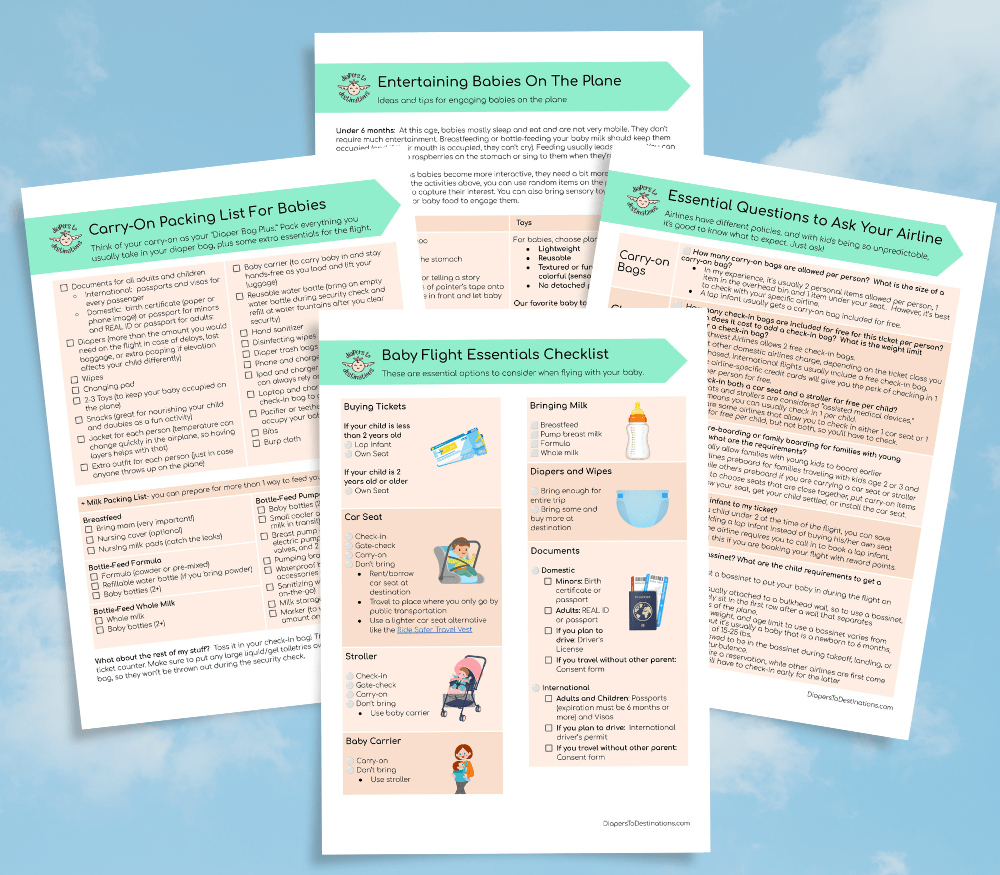
Flying With a Baby Soon?
Get my free Baby Flight Checklist so you don’t forget the things that can make flying with a baby way easier and way less stressful.
Booking Tickets
Time Your Flight Around Nap Times or Bedtimes
When it comes to flying with a baby, timing is everything! I always recommend booking red-eye flights or flights that coincide with your little one’s nap time. The longer they sleep, the less you have to entertain them (or worry about entertaining them)!
I remember my first international flight to London with my daughter, Serena. It was a nerve-wracking 10-hour journey, and I was prepared with toys and distractions, on edge about how I’d keep her occupied. Luckily, we booked a midnight flight, and she fell asleep as soon as we boarded (her bedtime is around 10 PM). Red-eye flights for the win! I didn’t even have to pull out any of the toys I brought for that flight!

Buying Plane Tickets for a Child Under 2 Years Old
If your child is under 2 years old at the time of your flight, you have two options for plane tickets:
Lap Infant
This means your little one sits on your lap and doesn’t have their own seat. It’s free for U.S. domestic flights and only 10% of the adult fare for international flights. Even though they don’t have their own seat, they still get a lap infant boarding pass. Just remember, this option is only available to kids under 2. If your child turns 2 on the day of the flight, you’ll need to buy a separate seat!
Get a Separate Seat
Purchasing a seat for your child means paying the full adult price for U.S. domestic flights. International flights, on the other hand, do offer a small discount for children. This option can be more comfortable for you—no cramped arms from holding your little one for hours!
If you buy a separate seat, you have the option of installing the car seat on the plane seat, which the FAA recommends as the safest option. (This doesn’t mean you have to. You can also conveniently check-in or gate-check the car seat, and let your child sit in the seat with a seatbelt or CARES harness.)
My Experience: What do I do?

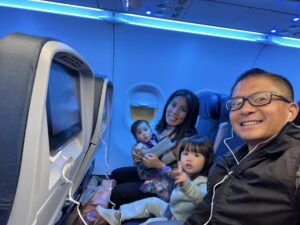

I’ve always gone with the “Lap Infant” option for both my daughter and son when they were under 2, and let me tell you why it worked for us:
- The cost-savings! A “lap infant” ticket is free for US domestic flights and 10% of the adult fare for international flights. It’s a deal that can’t be beat, and family vacations are super expensive!
- It makes breastfeeding so much easier.
- My baby could curl up and sleep comfortably on me. I have “contact nappers.”
- Honestly, I just didn’t want to haul a heavy car seat through the airport and onto the plane.
- I used a baby carrier on the airplane, which kept my hands free (this is great for babies under 6 months, but once they get older, they start to wiggle around a lot). Just a heads up, though—the flight attendant does make you take the baby out of the carrier during takeoff and landing.
If you’re torn between the 2 options, check out my post on Lap Infant vs. Seat Infant, where I break down the pros and cons of each choice and share what the FAA recommends.
✈️ My Favorite Baby Flight Items
Flying with a baby? These are the things that actually made it easier:
- Ergobaby Carrier – Supportive, comfy, and lets baby face out to see what’s going on.
- Doona Stroller – Stroller and car seat in one. So convenient for airports and getting in/out of cars.
- Elvie Wearable Pumps – Wireless, quiet, and super discreet. I’ve used it on car rides, walks, and even at a wedding under my coat.
- Pop-it Fidget Spinner – Always in my diaper bag. My 1-year-old loves it, my 4-year-old still plays with it. Great for planes, restaurants, anywhere we need quiet fun.
- Comotomo Baby Bottles – Soft, easy to hold, and never leaked in my bag or on the plane.
- Quick Clean Pump Wipes – I’ve used these on pump parts, bottles, airplane seat tables, restaurant high chairs. So versatile.
- Silicone Travel Bottles – TSA-sized and great for baby’s shampoo, lotion, or soap. No spills.
Budget Tips for Booking Flights
Use Credit Card Points
I love using travel points to save on flights! I earn points through the Chase Sapphire Reserve credit card, but the Chase Sapphire Preferred is also a great option with a lower annual fee.
Then I use these points to book flights using one of these 2 methods:
- I transfer the points to the airline partners
- or I book the flight through the Chase Ultimate Rewards portal
Sign Up For Airline Rewards
Ensure that everyone with a paid seat (every adult and child except for a lap infant) is registered in the airline’s rewards program. This way, you can accumulate points towards free flights or upgrades!
Which seat should you book for you and your baby?

Reserve a Window Seat for Your Child
I’ve found that the window seat really gives you the most flexibility when traveling with a baby.
If you have a lap infant, it’s great because you can lean against the wall to catch a little nap while your little one plays with fidget spinners, suction toys, window clings, or even just enjoys looking out the window at the changing scenery, especially during takeoff and landing.
And if your baby has their own seat by the window, they can snuggle up against the wall to sleep, use an inflatable footrest or airplane bed, or even relax in their car seat.
⚠️ Just a heads-up, though—make sure to check with your airline about using car seats or inflatable footrests, since not all airlines allow them, and there are specific rules about where you can use them. Usually, they’re approved for window seats that are not in exit rows to avoid blocking any passengers, but this varies from airline to airline so you have to ask your airline! If you aren’t able to reserve or get one of these approved seats, they will most likely make you gate-check your car seat or not let you use your airplane bed.
Oh, and looking out the window can really help with motion sickness!
Plus, keeping your child away from the aisle is a good idea to minimize the risk of bumping into things or getting too close to hot food and drinks being passed around. It just makes the whole journey a bit smoother!
Alternatively, if there are 2 adults traveling with 1 toddler, then the middle seat can be a good choice too, so both adults can easily assist your toddler.
Reserve a Bulkhead Row Seat If You Want a Bassinet
If you’re flying with a lap infant and hoping for a bassinet, make sure to reserve a bulkhead row seat. Bassinets are typically only available in those bulkhead rows, and there are usually only a few on each flight.
Keep in mind that these bulkhead seats are often prioritized for passengers with disabilities, those who’ve paid for extra legroom, or frequent flyers. Bassinet availability varies by airline and airplane (some airplanes have it and some do not, even within the same airline), and they’re usually offered on a first-come, first-served basis at the gate.
💡 Pro-tip: Check into the gate early to increase your chances of securing a bassinet.
That said, I’ve flown with a lap infant on 12 flights without ever using a bassinet, so it’s definitely manageable without one!
What To Carry On For A Flight With A Baby

We always use a backpack as a carry-on to stay hands free for juggling documents, our baby, and our luggage. I usually bring two backpacks: one for the diaper bag and snacks, and another for my personal items like a laptop and jackets. I store the backpacks under the seats on the plane (instead of the overhead bins) to be able to access them easily.
Make sure to carry on these to the plane:
- Identification Documents:
- US Domestic Travel: Bring a birth certificate (paper copy or phone image) or passport for minors and a REAL ID or passport for adults.
- International Travel: Ensure all passports are valid (not within 6 months of expiration) and visas if required for all adults and children, babies included.
- Diapers: Pack at least 6 diapers—basically more than you think you’ll need to cover the entire flight plus any delays (if you miss a connecting flight and can’t reach your baggage) or unexpected messes.
- Wipes: Bring at least half a pack.
- Antibacterial Wipes: Great for cleaning hands and surfaces before your baby touches anything.
- 1 Extra Change of Clothes for Everyone: You never know when a spill or blowout might occur. My kids have never thrown up on the plane (yet, knock on wood), but I have seen other kids throw up on flights. There is usually a paper bag in front of each seat for this reason. Two of my mommy friends also said their child threw up on them, and they ended up smelling the whole flight. Don’t let that be you! Bring an extra outfit for you and your child.
- Jackets: Airplanes often have air conditioning on blast, so I pack jackets for everyone.
- Items to keep baby engaged
- Pacifiers: Bring a couple along with a clip or container.
- Small Toys: Pack 1-2 lightweight toys to keep your baby entertained.
- Snacks: like pureed baby food (bring a bib for this one), dissolvable puffs, or cut-up fruits.
- Items to feed baby on the airplane
- Nursing Cover, Nursing Bra, and Nursing Pads: if you’re breastfeeding
- Milk Bottles and Cooler with Ice Pack: if you’re bottle-feeding on the plane
- Breast pump, a Hands-Free Pumping Bra, Milk Bottles or Milk Storage Bags: if you’re pumping on the plane
- Empty Water Bottle: Fill it after passing through security for hydration to keep you and your baby hydrated.
- Electronics: I bring all my important electronics like laptops, tablets/iPads, phones and chargers onboard because I just don’t trust that it won’t be thrashed or damaged in the check-in luggage.
What about the rest of my stuff?
Toss it in your check-in bag! Then “drop it like it’s hot” at the ticket counter.
Make sure to put any large liquid/gel toiletries over 3.4oz (100ml) (shampoo, conditioner, face wash, makeup remover, etc.) in your check-in bag, so they won’t be thrown out during security check.
The Baby Flight Checklist I Wish I Had for My First Flight
Instead of scribbling notes from this article, grab my free Baby Flight Checklist with what to pack, what to ask your airline, and other things that can make flying with a baby way easier.
Check out my blog post on Carry-On Packing List for a Flight With Baby for a more comprehensive list of what I pack and why along with FAQs like:
- Do you really need a birth certificate when traveling with a baby?
- Do you really need a consent form if you’re traveling without the other parent?
- Does a diaper bag count as a carry-on when traveling with a lap infant?
- Does a cooler for milk, juice, and snacks count towards a carry-on limit?
Flying With Car Seats and Strollers
Navigating the airport with a baby can feel like a juggling act, especially when you’re trying to figure out what to do with your car seat and stroller. Let’s be real: the logistics of flying with these essentials can make it way more complicated than just driving to your destination!
Check-In Your Car Seat or Stroller

How It Works
You can check both your car seat and stroller at the ticket counter alongside your luggage. Car seats and strollers are considered “assisted medical devices,” so you can check in one free item per child. Just double-check with your airline about their specific policy, as some may only allow you to check in one or the other, but not both for free. These items will be picked up in the baggage claim area, sometimes in a separate “oversized baggage” section.
Pros:
- You don’t have to carry it through the airport, which can be a huge relief when managing other bags and your baby.
Cons:
- There’s a risk of damage due to rough handling during transit.
- You’ll have to wait at baggage claim, like any other checked bag.
- There’s potential for your items to get lost, just like any checked bag.
Gate-Check Your Car Seat or Stroller
How It Works
Gate-checking means you hand over your car seat or stroller right before boarding the plane and get them back at the plane door when you exit.
Pros:
- Stroller: You can use your stroller to push your child through the airport.
- Car Seat:
- You can use your dolly with a car seat as a makeshift stroller to push your child through the airport.
- Tip To Get A Free Seat: If you didn’t pay for a separate ticket for your baby but want to test your luck, then don’t check-in your car seat. Instead, bring your car seat to the gate and ask the gate agent if the flight is full. If it isn’t full, install it in an empty window seat in your row. If not (if the flight is full), you can gate-check the car seat right there.
Cons:
- There’s a risk of damage due to rough handling during transit.
- Sometimes you have to wait at the gate for someone to bring it back to you.
Carry-On Your Car Seat or Stroller
Rules and Size Limitations:
- Car Seat Requires a Separate Seat For Your Child: If you choose to bring your car seat on board, you must have purchased a separate seat for your child to install it. The car seat must also be 16 inches wide or less (slim fit) to fit on the airplane seat (ask your airline for specific dimensions).
- Collapsible Stroller: A small, collapsible stroller can be carried on if it fits in the overhead bin or under the seat.
Pros:
- The FAA states that installing a car seat on the plane is the safest way for your baby to fly, especially during turbulence.
- If you bring either a car seat or stroller on the plane with you, you won’t have to wait for them to arrive.
Cons:
- If you need to install a car seat, you’ll have to purchase a separate seat for your child, which is much more expensive compared to a lap infant ticket.
- It can be heavy to haul a car seat through the airport, in addition to your baby and your luggage.
Don’t Bring the Car Seat or Stroller
If you want to lighten your load, you can choose not to bring the car seat or stroller, and consider alternatives.
- You can use a CARES harness on a plane instead of a car seat or a baby carrier or wagon instead of a stroller.
- You can rent or borrow a car seat or stroller at your destination from BabyQuip or a car rental company or a family or friend.
- If you’re traveling to a place where you can rely on only public transportation, you might not need a car seat at all. When we went to London in the UK, Paris in France, and Tokyo in Japan, we only used public transportation.
My Experience: What Do I Do?
Personally, I prefer checking in my car seat and gate-checking my stroller.
Since I usually have my baby as a lap infant, I check in my car seat to avoid lugging it around the airport. While some parents worry about potential damage to check-in luggage, my car seat has always been fine.
💡 Tip: If you choose this option, I recommend placing your car seat in a padded travel bag for extra protection and adding a luggage tag with your name, address, and phone number in case it gets lost (like any check-in luggage).
Gate-checking the stroller allows me to use the stroller up until I board the plane, and I can grab it right at the door when I exit. I’ve always gotten my stroller right away. However, I’ve heard stories of moms having to wait for their stroller and even missing connecting flights, so I wouldn’t recommend doing this if you have a short layover (under 1 hour).
With my second baby, I do things a little differently because I have a Doona stroller, which easily collapses into a car seat (it’s both a car seat and a stroller!). I can use it as a stroller through the airport and then collapse it into a car seat right before I gate-check it to avoid damage. I’ve even read that it could fit in the overhead bin on commercial planes, so I might try that next time to avoid any potential damage from gate-checking it. A downside though is that the Doona stroller has a short lifespan, roughly 1.5 years before baby grows out of it.

Check out my post on How to fly with baby and toddler car seats? especially if you want to know:
- What are the rules when flying with car seats?
- What does the FAA recommend as the safest option for children under 2 years old?
- How can I transport the car seat through the airport?
Tips For Traveling With a Baby at the Airport
Traveling with a baby can be a challenge, but with a few handy tips, you can make the airport experience much smoother. Here are some of my favorite strategies for navigating the airport with little ones!
Baby-Wearing (Use a Baby Carrier) Through The Airport
Whether your baby is walking or not, you’ll need a way to get them through the airport while managing your luggage. I always bring a baby carrier on every flight to keep my hands free for handling bags and documents. It’s essential for juggling everything while keeping your little one close.
I’ve traveled to many places without a stroller, relying solely on carriers like the Omni 360 Mesh Ergobaby Carrier or the Tush Baby with the Snug Attachment.
If you are not used to baby-wearing and find it uncomfortable or hot, a stroller is also a great option for wheeling both your baby and storing your carry-on items through the airport. Just make sure that if you intend to carry it onto the plane, it must collapse small enough to fit in the overhead bin. Otherwise, you can gate-check it, so you can use throughout the airport before boarding. If you do this, you can expect to get your stroller when you deboard the plane at your destination (though I have heard some parents complain of delays, so I wouldn’t do this if you had a tight layover under 1 hour).
Change Diapers Before the Flight
Let’s face it: airplane bathrooms are tiny, and changing tables can feel cramped. It is a fold-over table on top of the toilet with no space to take any extra steps. I always aim to change diapers within half an hour before boarding time to minimize in-flight changes.
Explore Family-Friendly Spots at the Airport
Airports can actually be pretty family-friendly if you know where to look! I love using nursing rooms—they’re clean, private, and perfect for feeding or changing a baby. We also use family rooms a lot since they let all of us stick together (and keep an eye on our luggage!).


Oh, and lounges are a lifesaver if you have a travel credit card like the Chase Sapphire Reserve—free snacks, Wi-Fi, and a comfy space for the kids make such a difference.
I’m still on the hunt for a good airport playground, though—I hear LAX airport has one, but I’ve never managed to find it!
Going Through TSA Security with a Baby
Navigating TSA screening with a baby can feel overwhelming, but knowing what to expect can make the process smoother. Here’s a friendly guide to help you through it!

What to expect
- Remove Shoes and Laptops and Tablets From Your Bag: If you don’t have TSA PreCheck or Global Entry, you’ll need to remove your shoes and take out laptops and tablets from your carry-on to place in a separate bin.
- Identification: For international flights, all adults and children will need passports. For domestic flights, adults need either a REAL ID or a passport and kids need a birth certificate.
- Kids Under 12: Great news—children under 12 don’t need to remove their shoes!
- Baby Food and Milk: Be prepared for additional screening for breast milk, baby food, and premixed formula, which are exceptions to TSA’s 3.4 oz liquid rule.
- Car Seats and Strollers: These will either go through the x-ray machine or be inspected manually.
- Stay Together: You will never be separated from your child during the screening process, which is a huge relief!
Bringing Milk and Liquids Through TSA

TSA (Transportation Security Administration) has specific rules about liquids, but luckily, there are exceptions for parents traveling with little ones. Here’s what you need to know:
- Liquid Restrictions: Normally, you need to pack liquids in a quart-sized bag, with each container being 3.4 oz (100 ml) or less. Anything larger must go in your checked luggage.
- Special Exceptions for Kids: You can bring more than 3.4 oz of certain liquids because they’re considered “medically necessary.”
This includes:- Formula (premixed liquid formula or water will be additionally screened)
- Breast milk (liquid will be additionally screened, whereas frozen will not)
- Toddler drinks
- Baby food and toddler food
- Pureed pouches
- Ice packs to keep these items cool
- Liquid/gel medications and creams
Pro Tip: Always let the TSA officer know if you have more than 3.4 oz of liquid, and place it in a separate bin for screening. A simple, “I have breast milk” or “I have puree pouches” works wonders!
To learn how to breeze through TSA with breast milk and formula, check out How To Bring Breast Milk or Formula Through TSA Screening On The Plane.
If you’re traveling with baby food pouches, don’t miss our Flying with Baby Food Pouches? Here’s Your Simple TSA Guide for all the tips you need.
Be sure to check out our Carry-On Packing List For Flying With a Baby, and visit the official TSA website for the most up-to-date rules.
Baby-Wearing Through TSA Screening
Most of the time, you can keep your child in a baby carrier as you walk through the screening, as long as your carrier doesn’t have any metal parts. I’ve done this many times without issue!
However, sometimes you may be asked to remove your baby from the carrier, and hold them while the carrier goes through the x-ray machine (this has happened to me too). It can vary by airport and TSA agent, so just roll with it! But if any type of screening makes you uncomfortable, you can ask if there is an alternative screening method.
Bringing Car Seats and Strollers Through TSA Screening
- Screening Doesn’t Apply to Check-In Items: Only car seats and strollers that are gate-checked or carried onto the plane need to go through TSA. Items that are checked in at the check-in counter will skip this process.
- Screening Process:
- Car seats and smaller strollers will typically go through the x-ray machine
- Bigger strollers may go through a metal detector and be inspected manually.
- You will most likely have to remove your baby from the stroller.
With these tips in mind, you’ll be well-prepared for TSA screening with your little one. Remember, you’ve got this, and soon you’ll be breezing through the airport like a pro!
Check out my post on flying with baby car seats, the pros and cons of each option, and the many creative and efficient ways people bring their car seat through the airport.
Our Baby Flight Checklist has a packing list for families that are breastfeeding and bottle-feeding.
Check out the TSA’s official page on traveling with children.
Family Boarding: Boarding Earlier with Young Kids
Most airlines allow families with young kids to board early, ahead of the zone or ticket class they paid for. If we qualify, we always take advantage of family boarding to get on the plane early, and so should you!


Some airlines pre-board for families with kids aged 2 or 3 and under, while others do so if you’re carrying a car seat or stroller. Be sure to check your airline’s policy ahead of time or ask at the check-in counter.
Benefits of Family Boarding (Pre-boarding)
- Choose Seats Together: You can select seats that are close together if you haven’t already done so.
- Easier Stowing: Stow your carry-ons above or below your seat, keeping them close by. You’re already wrangling kids—do you really want to walk far down the aisle to get your stuff?
- Calm Settling: Settle the kids in without the pressure of other passengers waiting behind you
- Use the Time Wisely: If you’re carrying a car seat or stroller, you can install the car seat or collapse the stroller and place it in the overhead bin nearby.
Taking Care of Your Baby on the Plane
Breastfeed Your Baby During Takeoff and Landing
We all know that “airplane ear” feeling—it’s that uncomfortable pressure in your ears when the altitude changes quickly. To help your little one, sucking or swallowing will relieve this pressure. Personally, I usually breastfeed my baby during takeoff and landing, but bottle feeding or offering a pacifier or any food item works just as well!
Now, I try to breastfeed during those crucial moments, but if my baby is already sound asleep, I let them be. In my experience, they usually handle it just fine. Out of the 14 flights I’ve taken with my kids, only once did my daughter Serena complain, saying “owieee ear” and crying for about 10 minutes before she fell asleep for the rest of the flight. So don’t stress too much—most babies adapt!
Fun In-Flight Activities for Your Baby
Okay, mamas, let’s talk about one of the most daunting parts of flying: keeping your baby entertained! You might be surprised to hear that it’s easier than you think. I remember feeling super anxious before my first couple of flights, but once we were airborne, it mostly turned into a lot of breastfeeding, flipping through safety guides, and munching on snacks.


My Experience: What Do I Do?
- I’ve flown with two babies (not at the same time, thank goodness!) on a total of 8 flights, and I didn’t pack any toys. Instead, I used whatever was around me to keep their attention—like opening the laminated safety guide or travel magazine, crinkling a plastic cup, or letting my baby shake a bag of chips as a makeshift rattle. I’ll also sing and blow raspberries or play peek-a-boo, which my baby seems to like.
- I always bring a nursing cover and breastfeed during the flight. It often knocks them out! After all, if they’re busy eating or drinking, they’re less likely to cry.
- I also pack some snacks like dissolvable puffs, baby food, or fruit pouches, which are exempt from the 3.4 oz liquid rule—score!
- If you’re feeling extra nervous and your baby is between 6 months to 1 year, consider bringing along some sensory toys, crinkle books, rattles, or teething toys to keep them engaged.
For even more ideas on entertaining your little one during the flight, check out my post on Entertaining Babies on a Flight.
See our printable page on how to entertain a baby on a flight in our free Checklists For Flying With Baby.
Diaper Changes On The Plane

When it comes to diaper changes on the airplane, be prepared for a cramped bathroom. Most planes have a changing table that folds down from the wall right above the toilet, which can be a bit tricky to maneuver in tight quarters.
It’s a good idea to have everything you need within reach before you go in—diapers, wipes, changing pad, and diaper trash bags—so you can get in and out quickly.
Also, I noticed on one flight that not all bathrooms had changing tables, so you can look out for the baby icon on the outside of the bathroom.
FAQ About Flying With a Baby
When is it safe to fly with your baby?
Most airlines allow newborns to fly at 7 days old, but it’s always best to check with your pediatrician first. This is especially important if your baby was born prematurely or has any heart or lung issues. Air travel is generally safe for full-term babies, but some doctors may recommend waiting until after their 2-month vaccinations for added protection.
Do babies fly free internationally?
For lap infants (children under 2 who sit on your lap), most airlines charge about 10% of the adult fare plus taxes and fees on international flights. While this is much cheaper than purchasing a seat, it’s important to remember that space will be limited, and holding your baby for the entire flight can be tiring. Always check with your airline for their specific policy and pricing.
If you choose to purchase a separate seat for your baby, you’ll usually pay a discounted child fare on international flights. This option allows your little one to have their own space, often requiring an FAA-approved car seat or CARES harness for safety. While it’s more expensive, having a dedicated seat can make long-haul travel more comfortable for both you and your child.
Do babies fly free for domestic flights within the US?
On most domestic flights within the US, babies under 2 years old can fly for free as a lap infant. This means they will sit on your lap for the entire flight. However, you’ll still need to pay taxes and fees, which can vary by airline.
If you prefer your baby to have their own seat on a US domestic flight, you’ll need to purchase a separate ticket, which is typically available at the same rate as an adult ticket. Just be sure to check with your airline, as policies may vary, and if your baby turns 2 before your return flight, you will need to book a seat for them.
Final Thoughts: Flying With a Baby
While flying with a baby can feel a bit overwhelming, it’s also a fantastic chance for some family adventure and bonding. With a little planning—like booking the right tickets, packing your carry-on just right, and knowing what to expect at the airport—you can make the whole experience much smoother for both you and your little one. Trust me, the more you know about what to expect, the less stressful it becomes!
I’d love to hear from you! What tips or tricks have you figured out that made flying with your baby a breeze? Share your stories in the comments below! Or if you still have questions, ask our friendly community of parents or ask your question below.
And if you know other parents gearing up for a flight, feel free to pass this post along. Let’s help each other navigate this journey together! Safe travels, and enjoy every moment with your little one!
Ready for Your Trip?
Download my free Baby Flight Checklist so you can feel more prepared and less stressed before your next flight with your baby.



4 Comments