

Flying with a baby can feel like a wild ride, can’t it? Between keeping your little one entertained and juggling their sleep and feeding schedules, the thought of traveling can be overwhelming. One of the first big decisions you’ll face is whether to book a “Lap Infant” ticket or snag an extra seat for your baby. Let’s break it down together!
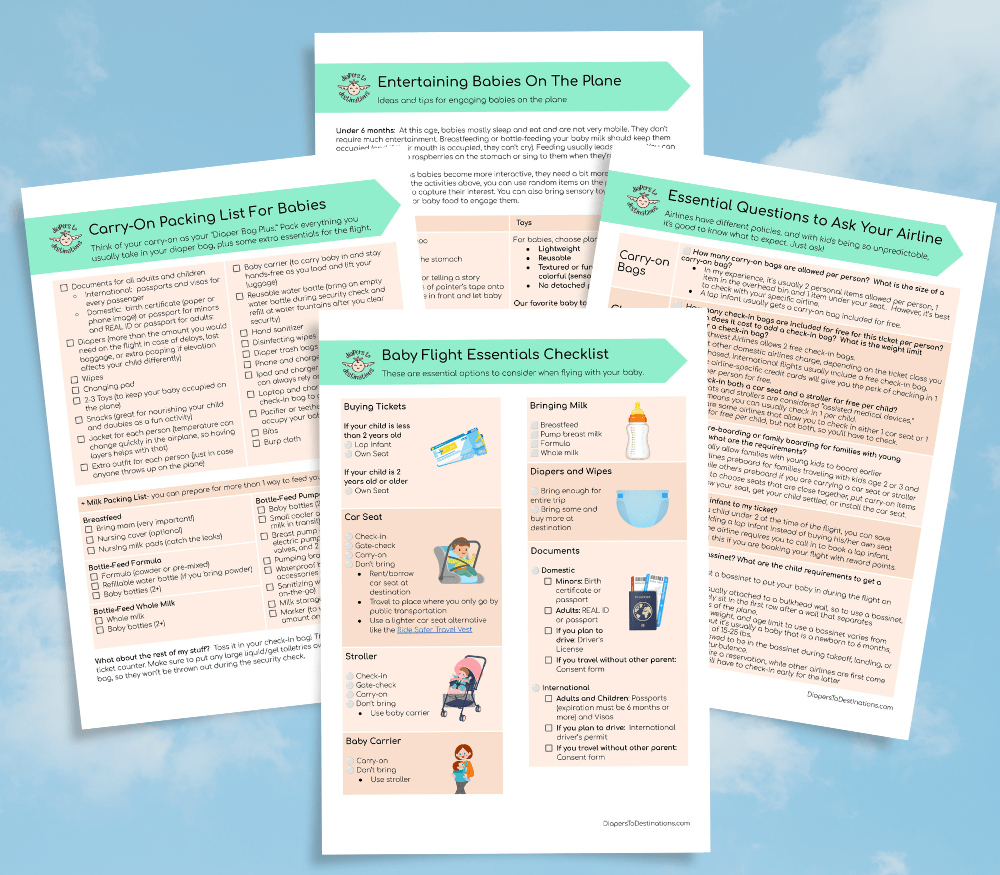
Flying With a Baby Soon?
Get my free Baby Flight Checklist so you don’t forget the things that can make flying with a baby way easier and way less stressful.
Understanding the Options


What Does a Lap Infant Mean?
A “Lap Infant” (also called an “infant on lap”) is a child under 2 years old who sits on your lap during the flight. This option is available for children who meet the age requirement at the time of your flight. Just a heads up: if your little one turns 2 on the day of travel, you’ll need to purchase a separate seat.
What Does an Seat Infant Mean?
A “Seat Infant” (also called an “infant on seat”) refers to a child under 2 who has their own purchased seat. This usually requires using an approved child restraint system (CRS), such as a car seat or a CARES harness, to keep your little one safe during the flight.
Pros and Cons of Each Option
Pros and Cons of Lap Infant
Pros:
- Lower Cost: Often free on domestic flights and around 10% of the adult fare for international flights.
- Easier Through the Airport: You can check your car seat, so you don’t have to lug it around the terminal.
- Feeding Made Easy: Breastfeeding or bottle-feeding is a breeze when your baby is right next to you.
- Cozy Naps: There’s something so sweet about having your baby snuggled up close for a nap.
- Cuddle Time: Who doesn’t love some extra snuggle time while flying?
Cons:
- Limited Space: Let’s face it—there’s not much room for both of you. It can get cramped!
- Safety Concerns: While flying is generally safe, holding a baby during turbulence can be nerve-wracking.
Pros and Cons of Seat Infant
Pros:
- Safety First: Kids under 40 lbs can be secured in an approved car seat or CARES harness in their own seat. The FAA recommends that buying a separate seat for a baby and installing a car seat is the safest option, especially during turbulence.
- Extra Space: If you prefer not to have your little one on your lap or need room for snacks and toys, a separate seat can be a lifesaver.
- Comfort for Your Child: Having their own seat can be more comfortable for toddlers, especially if they like to move around.
Cons:
- Higher Cost: This option usually costs the full adult price for domestic flights and is slightly discounted for international flights.
My Experience: What Do I Do?
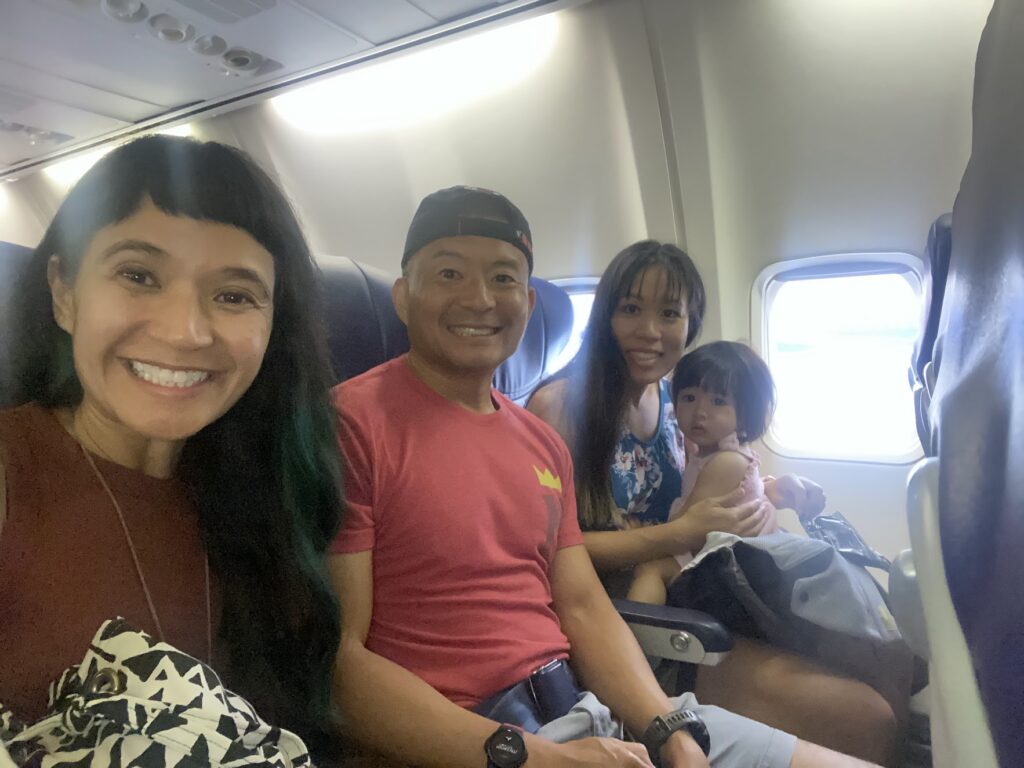
I’ve always gone with the “Lap Infant” option for both my daughter and son when they were under 2, and it worked well for us.
Here’s why:
- Breastfeeding: It made breastfeeding so much easier.
- Comfortable Naps: They could curl up and sleep comfortably on me.
- No Heavy Lifting: Honestly, I just didn’t want to haul a heavy car seat through the airport.
- Hands-Free: I even used a baby carrier on the plane, which kept my hands free (great for babies under 6 months, but once they get older, they start to wiggle around a lot). Just a heads up, though—I do have to take the baby out of the carrier during takeoff and landing.
- Free or Super Cheap: free on domestic flights and 10% on international flights for a lap infant. That deal is hard to beat.
But here’s the funny part: when my daughter was almost 2, we decided to go for the “Lap Infant” ticket one last time. I thought, “Let’s get this last flight in while she still flies free!”
Well, once we were on the plane, she suddenly started shouting, “Seat! Seat!” as in, she wanted her own seat! Thankfully, the flight attendant let us use an empty seat in our row after we were in the air, but it was a solid reminder that toddlers have their own agenda.
If you have a little one, I’m sure you totally get what I mean!
✈️ My Favorite Baby Flight Items
Flying with a baby? These are the things that actually made it easier:
- Ergobaby Carrier – Supportive, comfy, and lets baby face out to see what’s going on.
- Doona Stroller – Stroller and car seat in one. So convenient for airports and getting in/out of cars.
- Elvie Wearable Pumps – Wireless, quiet, and super discreet. I’ve used it on car rides, walks, and even at a wedding under my coat.
- Pop-it Fidget Spinner – Always in my diaper bag. My 1-year-old loves it, my 4-year-old still plays with it. Great for planes, restaurants, anywhere we need quiet fun.
- Comotomo Baby Bottles – Soft, easy to hold, and never leaked in my bag or on the plane.
- Quick Clean Pump Wipes – I’ve used these on pump parts, bottles, airplane seat tables, restaurant high chairs. So versatile.
- Silicone Travel Bottles – TSA-sized and great for baby’s shampoo, lotion, or soap. No spills.
The Baby Flight Checklist I Wish I Had for My First Flight
Instead of scribbling notes from this article, grab my free Baby Flight Checklist with what to pack, what to ask your airline, and other things that can make flying with a baby way easier.
Factors to Consider When Choosing
Flight Length
Think about how long your flight will be. For shorter flights, the “Lap Infant” option might be more manageable, but for long-haul flights (5 hours or longer), having a separate seat can make a world of difference in comfort.
Child’s Age
Your child’s age and temperament are key factors. Younger infants may be content on your lap, while older babies might prefer their own space. If your little one is getting close to two, they might not want to stay still on your lap for an entire flight.
Child’s Temperament
Some babies love snuggling and contact naps, and some babies just don’t want to be smothered by you. Which baby do you have?
Budget Considerations
Of course, budget plays a role. The “Lap Infant” option is way more cost-effective, but investing in a separate seat could mean peace of mind that you’re going to be comfortable and that your child will be safest, according to what the FAA recommends. Weigh your options to find what works best for your family.
Safety Guidelines
The FAA recommends that children under 40 lbs be secured in an approved child restraint system (CRS), such as a car seat (either forward or rear-facing) or a Child Aviation Restraint System (CARES) harness, in their own seat to protect them from unexpected turbulence.
Choose the Right Seat Based On Your Child’s Weight:
- 0-20 lbs: Rear-facing seat
- 20-40 lbs: Forward-facing seat
- 22-44 lbs: CARES device
- 40+ lbs: Airplane seatbelt only
Always check with your airline to ensure your family is seated together and that your car seat is suitable for air travel. Car seats generally must be installed in a window seat, cannot be placed in an exit row, and must not block an escape path in an emergency.
FAQ
What does the FAA recommend as the safest option for children under 2?
The FAA recommends that children under 40 lbs be secured in an approved child restraint system (CRS), such as a car seat (either forward or rear-facing) or a Child Aviation Restraint System (CARES) harness, in their own seat to protect them from unexpected turbulence.
Choose the Right Seat Based On Your Child’s Weight:
- 0-20 lbs: Rear-facing seat
- 20-40 lbs: Forward-facing seat
- 22-44 lbs: CARES device
- 40+ lbs: Airplane seatbelt only
Always check with your airline to ensure your family is seated together and that your car seat is suitable for air travel. Car seats generally must be installed in a window seat, cannot be placed in an exit row, and must not block an escape path in an emergency.
Why do you choose a lap infant when installing a car seat on the plane is the safest option?
You know, when I first started flying with a baby, I had no clue that I could actually install a car seat on the plane. Seriously, I’d never seen anyone do it! It wasn’t until I did some digging into flying with babies that I discovered the FAA-approved car seat policy.
Honestly, I got used to flying with my baby on my lap—it’s legal, way cheaper, and so much easier for breastfeeding. Plus, it helps my little one feel secure. Holding them for hours isn’t a big deal for me, and if my arms get tired, I just ask my husband to take a turn.
And let’s be real, I really don’t want to drag a heavy car seat through the airport. The thought of carrying that and my baby stresses me out.
But since you asked, I had to also dig up some data.
Theoretical vs. Actual Risks: Theoretically, a car seat provides better restraint during turbulence and could enhance survival chances in the event of a crash. However, most airplane crashes are not survivable. Car seats and CARES harnesses are mostly intended to prevent injuries from turbulence, yet a comprehensive study revealed an overall injury rate of children in commercial airlines is about 1 in 250,000 for children. This number is very small. If you flew once every day, it would take 684 years to expect one incident. This statistic suggests that while safety is paramount, the likelihood of injuries from turbulence occurring during a flight is unlikely.
References:
Can I use a car seat on the plane?
Yes! If you choose to purchase a separate seat for your infant, you can install an FAA-approved car seat for a child under 40 lbs. Most car seats are FAA-approved, although booster seats are not.
Read more about flying with baby car seats.
What seat should I book if I want to use a car seat?
Most airlines require that car seats be installed in a window seat that is not in the emergency exit row, as this ensures that the seat does not block an escape path in case of an emergency. However, it’s best to check with the specific airline because there can be some additional rules like not the last row.
Check out more tips like this if you’re carrying on and installing the baby car seat on the flight.
How safe is flying compared to driving?
It’s important to keep in mind that flying with a baby is significantly safer than driving. In fact, you’re more likely to be struck by lightning than to experience an accident on a commercial flight. If the expense of purchasing an additional seat for your baby is making you consider driving with a car seat instead, it might be worth reconsidering. Traveling with a lap infant on a commercial airplane is way safer than driving with an infant in a car seat.
References:
- https://injuryfacts.nsc.org/all-injuries/preventable-death-overview/odds-of-dying/
- https://parentdata.org/should-kid-be-in-car-seat-on-plane/
What if my child turns 2 years old on the day of travel?
The rules are that if your little one turns 2 on the day of travel, you’ll need to purchase a separate seat for them. Lap infant is no longer an option. However, with that being said, I have heard from some mommy friends that the airline typically doesn’t check. Also, in my experience, I have only been asked for a birth certificate 1 time out of 14 flights with kids.
Can two lap infants sit in one row?
Most airlines do NOT allow for two lap infants in one row because there’s only one extra oxygen mask per row. If you have two lap infants, you’ll likely need to book seats in different rows.
What documents do you need to fly with a baby?
US Domestic Travel: Bring a birth certificate (paper copy or phone image) or passport for your baby, and a REAL ID or passport for adults.
International Travel: Babies need to have a passport and visa, if required, just like all other minors and adults. Make sure your passport is valid (not within 6 months of expiring) when you travel.
What else should I know about flying with a baby?
- Flying With A Baby From a US Airport: Everything You Need To Know
- How to bring breast milk and formula through TSA on the plane for your baby?
- How To Entertain a Baby (0-12 Months) On A Flight?
- Carry-On Packing List for Flying With a Baby
- How to fly with baby and toddler car seats?
- How I Took A Baby Passport Photo At Home For $0.14
Final Thoughts: Lap Infant vs. Seat Infant
It’s worth remembering that choosing between a lap infant and buying your child their own seat is a very personal decision. What works well for one family may not be the best fit for another, and that’s completely okay. Your child’s temperament, your budget, and your travel plans all play a role in what makes the most sense. There isn’t a single right answer, only the choice that feels best for your family.
Ready for Your Trip?
Download my free Baby Flight Checklist so you can feel more prepared and less stressed before your next flight with your baby.






2 Comments